
NAD+
Subcutaneous / IV Use - Nicotinamide Adenine Dinucleotide, a critical coenzyme found in every cell that fuels energy production, DNA repair, and cellular longevity. Levels naturally decline with age.
Potential Benefits
Key advantages and therapeutic effects
Cellular Energy Production
- Essential cofactor for mitochondrial ATP synthesis
- Powers the electron transport chain
- Reduces fatigue and increases overall energy levels
- Supports sustained mental and physical stamina
DNA Repair & Longevity
- Activates sirtuins (SIRT1–SIRT7) — longevity-regulating enzymes
- Fuels PARP enzymes responsible for DNA strand repair
- Helps reverse cellular aging at the molecular level
- Supports telomere maintenance
Neuroprotection & Cognitive Function
- Supports brain mitochondrial function
- May improve mental clarity and focus
- Potential benefits for neurodegenerative disease prevention
- Enhances neuronal repair processes
Metabolic Health
- Improves insulin sensitivity
- Supports healthy glucose metabolism
- Enhances fat oxidation and metabolic flexibility
- May reduce markers of metabolic syndrome
Anti-Aging & Inflammation
- Reduces systemic inflammation via NF-kB pathway modulation
- Activates anti-aging pathways (SIRT1/AMPK)
- Supports immune cell function
- May slow biological aging markers
Cardiovascular Support
- Improves endothelial function
- Supports healthy blood pressure regulation
- May reduce oxidative stress in cardiac tissue
- Enhances mitochondrial efficiency in heart muscle
Injection Guide
Step-by-step subcutaneous administration
Gather Supplies
- NAD+ 100mg vial (lyophilized powder)
- Bacteriostatic water for injection
- Alcohol swabs
- 1cc insulin syringe
- 3cc syringe
- Sharps container or a safe disposal container
Wash Hands
- Thoroughly wash your hands with soap and water.
Prepare the Medication
- Using 3cc syringe, draw 2mL of bacteriostatic water.
- Inject bacteriostatic water slowly into the NAD+ vial.
- DO NOT SHAKE — gently swirl until fully dissolved (clear solution).
- Allow 2–3 minutes if powder is slow to dissolve.
Prepare the Dose
- Clean the rubber top with an alcohol swab.
- Draw the prescribed dosing units using a sterile insulin syringe.
- Remove air bubbles by tapping the syringe and pushing the plunger slightly.
Choose Injection Site
- Abdomen (at least 2 inches away from the navel)
- Thighs (front or outer thigh)
- Back of the upper arm
Clean the Site
- Wipe the injection site with an alcohol swab and let it dry completely.
Inject the Medication
- Pinch a fold of skin
- Insert the needle at a 45 to 90-degree angle.
- Push the plunger slowly and steadily — inject over 30–60 seconds.
- Withdraw the needle and dispose of it properly.
- Apply light pressure with the alcohol swab pad.
- Note: NAD+ injections may cause a flushing or warm sensation — this is normal.
Injection Sites
Recommended locations for administration
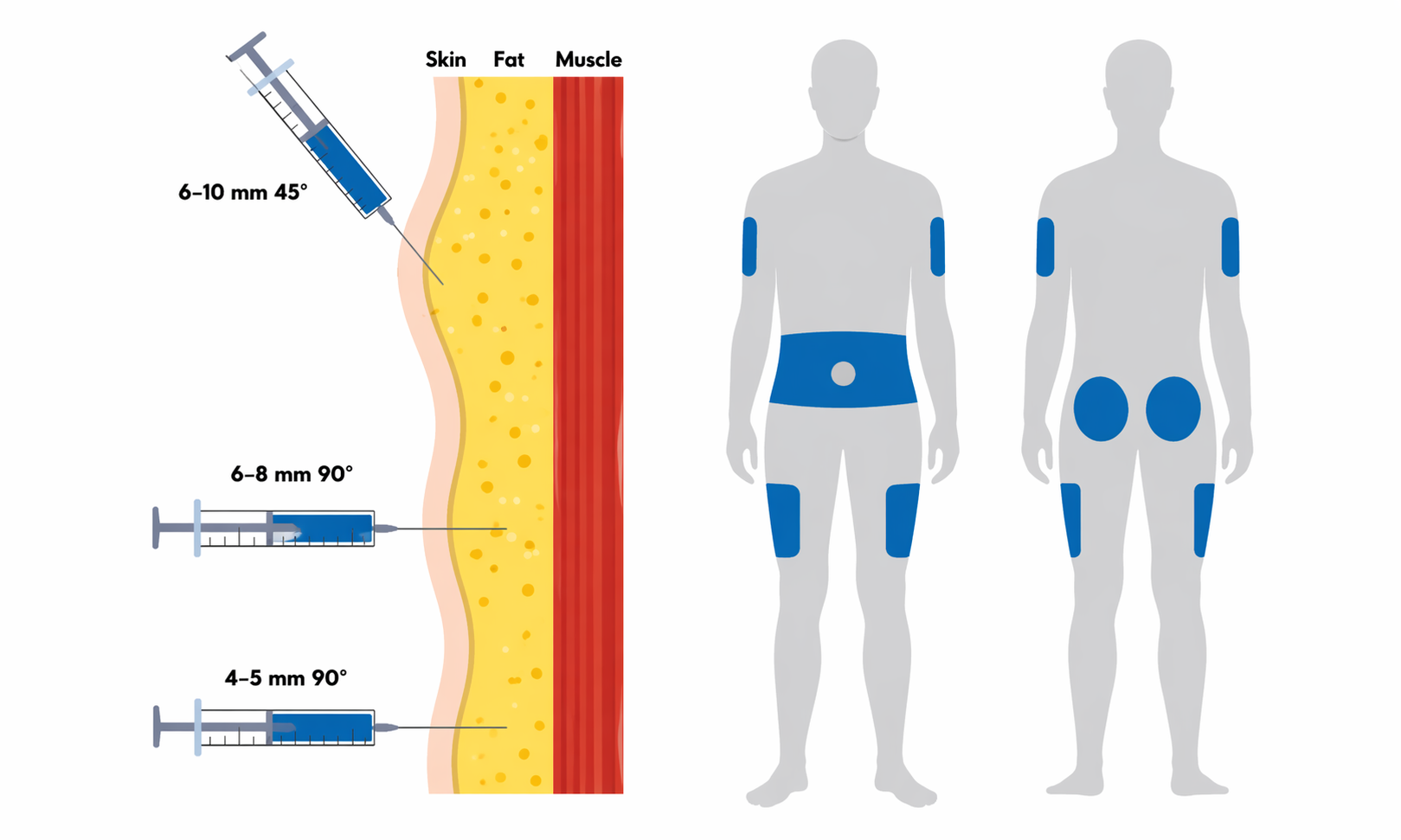
ABDOMEN
Below your ribs and above your hip bones, at least 2 inches from the navel. Most common site for self-administration. Slower injection speed reduces flushing sensation.
THIGH
Front or outer thigh area. Rotate between left and right thigh to prevent injection site reactions.
UPPER ARM
Back of the upper arm (triceps area). Best if administered by another person due to difficulty self-reaching.
Rotate injection sites each week to keep skin healthy and medication effective. Avoid areas that are scarred, bruised, or irritated.
Dosing Guide
Calculate your dose - consult your healthcare provider
Dosage Calculator
Calculate your insulin syringe units
Total peptide in vial
Amount of water added
Amount you want to inject
Draw this amount on your syringe:
Concentration: 50 mg/mL
This is for general educational purposes only — actual dosing should always be set by a licensed physician. Start at the lowest dose to assess tolerance. Inject slowly over 30–60 seconds to minimize flushing. Best administered in the morning or early afternoon — avoid evening use as it may disrupt sleep. A loading phase of 5 consecutive days followed by maintenance 3–5x/week is a common protocol.
Suggested Dosage: NAD+
General reference only. Consult your physician.
| Starting Dose | Typical Range | Upper-End / Max |
|---|---|---|
50 mg 2x weekly | 50-100 mg 2-3x weekly | 500-1000 mg weekly total |
50 mg 2x weekly
50-100 mg 2-3x weekly
500-1000 mg weekly total
This is for general educational purposes only — actual dosing should always be set by a licensed physician. Start at the lowest dose to assess tolerance. Inject slowly over 30–60 seconds to minimize flushing. Best administered in the morning or early afternoon — avoid evening use as it may disrupt sleep. A loading phase of 5 consecutive days followed by maintenance 3–5x/week is a common protocol.
Side Effects
Potential adverse reactions to be aware of
Potential Side Effects
- Flushing or warm sensation during/after injection (common, usually brief)
- Injection site discomfort
- Nausea (especially at higher doses)
- Headache
- Fatigue or dizziness immediately post-injection
- Mild anxiety or restlessness (transient)
Cycle Information
Recommended timing between cycles
CONTINUOUS OR 4-6 WEEKS ON, 2 WEEKS OFF
(Maintenance Protocol)